This fall we should all finally be able to return to a “new normal” school experience, in the traditional in-person way.
Except one way we were changed by the pandemic is almost all students and their parents have been exposed to some sort of virtual school experience. And some parents will want their districts to continue to offer virtual options for attending school.
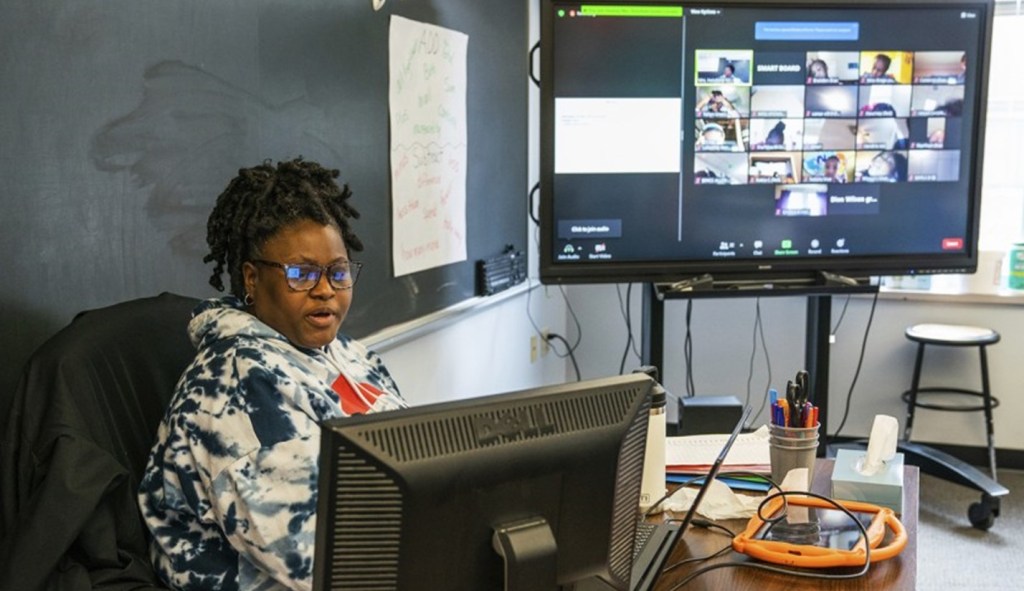
For some, this will be because of lingering concerns of infection from COVID-19. But other parents may have come to feel that attending virtually is simply a better way for their children to go to school.
And so, districts will need to make decisions on which models they will—or will not—choose to offer. These decisions won’t be easy. Districts may need to decide not to offer virtual models that students and parents prefer but which the districts determine to not be in the best interest of the students seeking these options, plus also their teachers and the other students.
The biggest issue has to do with the concurrent model.
Alternatives for Providing a Virtual Option
Districts seem to have at least four alternative ways to address expectations for virtual school:
- Continue to offer a synchronous concurrent option, in which online students can attend in-person classes along with the students who are at school and in the classroom. Synchronous means the class is live. Concurrent means online and in-person students both attend at the same time.
- Offer special synchronous classes for virtual learners only, grouping together online learners from across the district. So, everyone in the class is virtual.
- Offer an “asynchronous” virtual option, in which students use technology to access learning materials but don’t necessarily join together at the same time with fellow students in an online class.
- Decline to offer any virtual option, either synchronous or asynchronous.
Only a year ago, most districts did not offer a virtual option. But with the explosion of the pandemic in March of 2020 districts had to quickly work to keep school going, despite not being able to allow students to be in the building.
Some districts distributed paper texts and materials to their students—kind of “asynchronous,” but without the technology. But most districts adopted virtual solutions. What helped is that many districts had already implemented 1-to-1 device coverage, and others were well on the road there. And districts worked quickly to issue devices to any students who needed them.
This enabled a conversion of existing classes to virtual classes. There was some use of asynchronous virtual classes. But most districts went to synchronous classes—students attended virtually from home, using products such as Google Meet or Zoom, interacting with their teachers who also joined remotely.
In the fall of 2020, most districts returned to face-to-face classes. But many districts also provided a synchronous concurrent option, in which some students could join the class virtually. This accommodated situations such as students having to be out temporarily due to COVID-19 exposure.
But how about the fall of 2021? Why not just continue to allow a synchronous concurrent option?
Not a Good Idea?
There are several reasons why continuing to offer the synchronous concurrent option may not be a good idea.
- For most students, attending school virtually is just not as effective as attending face-to-face. With traditional schools, students enjoy the structure imposed by the facility and the scheduled school day. And their teachers are on the scene and can more easily ensure that students are engaged throughout the day.
- The synchronous virtual option requires extra work from our already-overworked teachers, who among other things must ensure there is a virtual alternative for at least some lessons. And they must manage the technology for the virtual sessions.
- Concurrent classes also provide distractions and possible lost time for everyone—the in-person students, the virtual students, and especially the teachers, as they work to orchestrate the whole scene.
- And, trying to learn through a virtual session works the most poorly for disadvantaged students and those with special needs.
This is not to say we shouldn’t use technology. The pandemic greatly increased our technology expertise. And providing every student with their own device has opened the door to many effective uses of technology. These uses include supporting personalized learning through the use of powerful adaptive learning software.
And so, the pandemic will hopefully advance our use of technology in learning—except this will work best for children in structured in-school settings.
But if it is not wise to continue synchronous concurrent classes, how can districts satisfy parents seeking a virtual option for their children? One alternative is to group virtual students together into special synchronous-only classes.
Asynchronous Classes—The Most Manageable Option?
But possibly the most manageable alternative is to offer an asynchronous virtual option.
Asynchronous online courses had their start at the college level in the 1990s. Some K-12 districts then began to offer asynchronous virtual programs to appeal to parents who wanted to home school their children, or to accommodate students who were uncomfortable in the traditional school setting. An example is the School District of Waukesha Wisconsin’s eAchieve Academy, which was founded in 2004.
In the 2019-20 school year, 34 of the 50 states allowed districts and charter schools to offer asynchronous virtual school options. And 293,717 of the 50,453,111 students in the U.S., about 0.6%, attended school programs that were fully virtual. [i]
Districts currently without an asynchronous program might be wise to not attempt to build their own program from scratch. An alternative would be to partner with a commercial provider. An example is the School District of Greenfield Wisconsin, which is partnering with the Edmentum provider while also using a district teacher as a digital learning coach. Another alternative would be to collaborate with another district.
Students in Wisconsin also have the option to attend a virtual school in another district through the State’s Open Enrollment program. But they must apply by April 30 for an upcoming school year.
Let’s Think This Through
Some parents and students will reasonably expect their school districts to continue to offer virtual options like those they enjoyed during the pandemic. But districts would be wise to think through which options would be best for all their students.
See also the Education Week article on “Forbidding Remote Learning: Why Some Schools Won’t Offer a Virtual Option This Fall,” at https://www.edweek.org/leadership/forbidding-remote-learning-why-some-schools-wont-offer-a-virtual-option-this-fall/2021/06. The photo above of Tanya Holyfield, a 2nd grade teacher at Manchester Academic Charter School in Pittsburgh, is from this article.
[i] https://nces.ed.gov/ccd/tables/201920_Virtual_Schools_table_3.asp
 Managing Technology in K-12 Learning