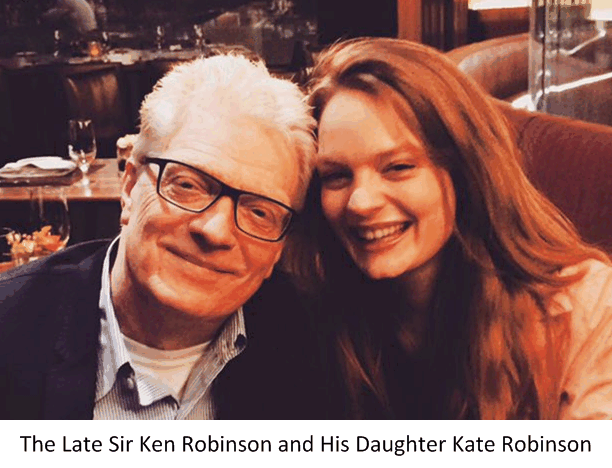
Sir Ken Robinson, who died in 2020, was one of the world’s leading advocates for change in education. In his final days he was able to begin work on a book coalescing his philosophy and calling on us to imagine a better world of education for our children. His daughter, Kate Robinson, was able to complete his work, and the book was published in March. The book is “Imagine If…Creating a Future for Us All.”
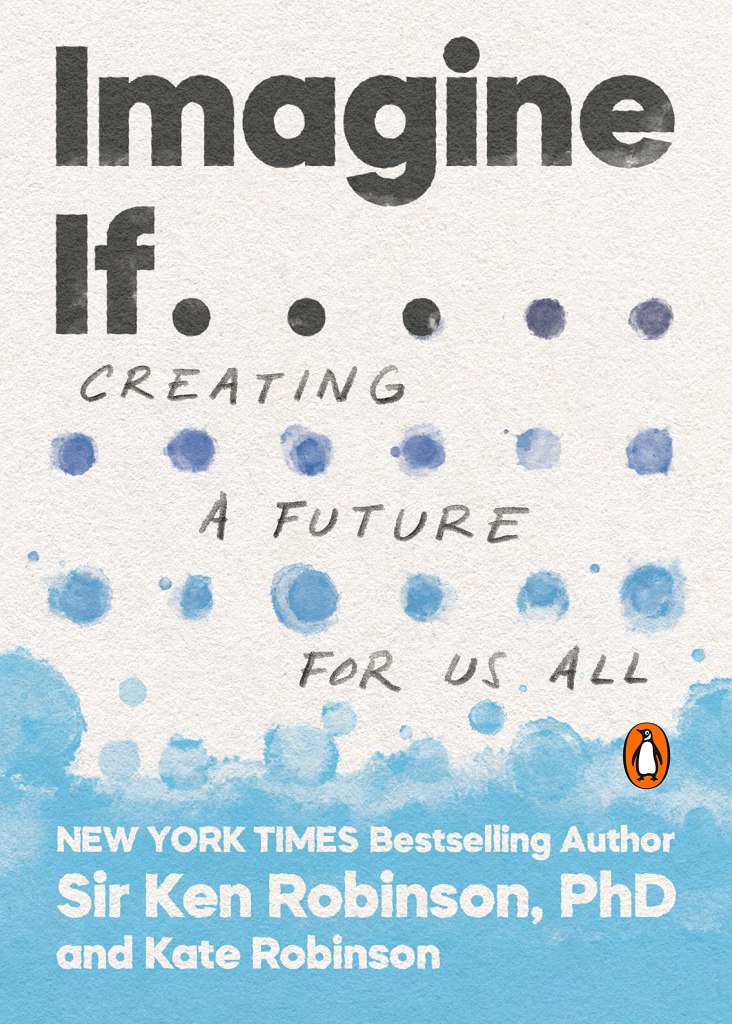
Sir Ken’s Book Calls on Us to Build Abilities Such as Creativity
Sir Ken argues that technology has made our world evolve much faster. And this evolution has created great challenges for educators and for our children.
The world our kids will be entering as adults will be more challenging than the world we have known. As they face climate change and other crises, they will be inheriting a messed-up world they will need to fix. And they will need new and more sophisticated skills to help manage this world.
Sir Ken calls for a “global reimagining” of not just education but of how our world works. He argues that the stakes couldn’t be higher—our kids will be called on to literally save the world.
He argues we need to move on from how our schools are still using the traditional graded system to intensely focus on teaching reading, writing, and math skills, and to measure progress using standardized tests.
Certainly, in the future our kids will need these skills more than ever, won’t they? But he argues our kids will also need a new set of skills to function in a more sophisticated world and to effectively battle a new set of problems. For example, he discusses eight “core competencies” students should attain, all happening to start with the letter “C:”
- Curiosity
- Creativity
- Criticism
- Communication
- Collaboration
- Compassion
- Composure
- Citizenship
Sir Ken also argues we need to move to a system in which students are freer to pursue their interests. For these and other reasons he says we should move away from our highly structured school day and grades. In an interesting analogy, he argues we need to move from the existing “factory” model of education to more of a “farm” model.
In conclusion, he calls on educators, parents, and all of us to imagine this new world of education, and to “be the change” to make it happen.
The Book Does an Exceptional Job
The book does an excellent job of sketching out a much different future world of education and calling on us to “imagine” how we might bring this new world about.
This vision couldn’t be grander. Our world is broken, Sir Ken says, and problems such as climate change will get worse. But we can get onto a better road by radically changing schools, and in the process equipping a new generation of soon-to-be adults with the skills to make a better world.
One possible criticism of the book is that it is too short, at only 113 pages. Another possible criticism is the book does not prescribe more specific solutions.
But Sir Ken realized that in education change must be driven by our educators, in a bottom-up way. He asks us to imagine a better future, and he identifies the critical strategies we need to bring about this world. But then he winds down, and he calls on principals and teachers to work out the details of what we must do to make what we’ve imagined a reality.
Imagine How Technology Can Make It Happen
The scope of Sir Ken’s book couldn’t be wider, as he appeals to us to reimagine in a basic way how our kids could learn. But where does technology fit in as we imagine this future?
Again, Sir Ken urges us to move beyond spending so much of our time teaching reading, writing, and math skills, I understand why he wants us to free up more time for things like creativity and the other “C” skills. Except even with today’s emphasis on basic skills, too many students are failing to master these skills, and this is especially so for students from disadvantaged backgrounds. And in our more-demanding future there will be even less room for those who lack these skills. We must do better in lifting up all of our kids.
The first thing I would imagine for our future world is to adopt more of a personalized learning approach, and to use technology to enable personalized reading and math instruction so all students could continually proceed at their own pace. Personalized learning technology provides ongoing assessment of the students’ progress, and so it can also offer an alternative to the several-times-a-year standardized tests.
But I would join with Sir Ken in imagining a future in which we carefully monitor screen time. In his future world, students would have much more interpersonal interaction, but I don’t think calling for that conflicts with a future in which we also make more effective use of technology.
For example, he asks us to consider more use of what is sometimes called differentiated learning, in which individuals and small groups learn through studying different topics and working on different projects that are of special interest to them. Many of these activities would naturally involve working with technology. Part of the role of the teachers and other school staff would be to ensure that the students had the needed technology, and to help them in its use.
But the teachers would also need to work to ensure that every project didn’t degenerate into a pure technology project, which would be a danger for many kids. In the future that I imagine, every school day would include technology-free time, including simply some reading of paper books. And differentiated projects would include technology-light projects and especially projects involving face-to-face interaction among students.
What Now?
Sir Ken’s imagining of his bold future might be frightening for many teachers, who feel overwhelmed with even the current system—how, they may ask, could I orchestrate the kind of learning environment he is talking about?
I’m not sure he had the answer to that question, other than his faith that our teachers could work this out. But certainly, the creative use of technology needs to be part of the solution.
What do you think? If you have any thoughts on this, leave a comment below. Or e-mail me at schulzj@jerryschilz.com.
Sir Ken did not live to see our most recent development, which is how the Covid-19 pandemic fast-forwarded our trends for the use of technology in learning. In our next blog posting in a few weeks, let’s look at how the pandemic has advanced these trends, how the impact of the pandemic has been positive and how it has not, and what we might want to do now.
 Managing Technology in K-12 Learning